Related Articles
- 6 Revolutionary Solar Panel Cleaning Robots Since 2019 Rated for Efficiency and Contractor Appeal
- How Unexpected Weather Patterns Are Shaping Homeowner Choices in Solar Installation Partnerships
- How Solar Inverter Noise Pollution Affects Urban Wildlife and What Manufacturers Are Overlooking
- How Solar Inverters Influence Home Resale Value and What Buyers Rarely Consider Before Purchase
- How Microclimates Secretly Shape Solar Energy Output in Unexpected Urban and Rural Landscapes
- The Quiet Role of Microclimates in Shaping Solar Harvesting Outcomes Beyond Conventional Efficiency Measures
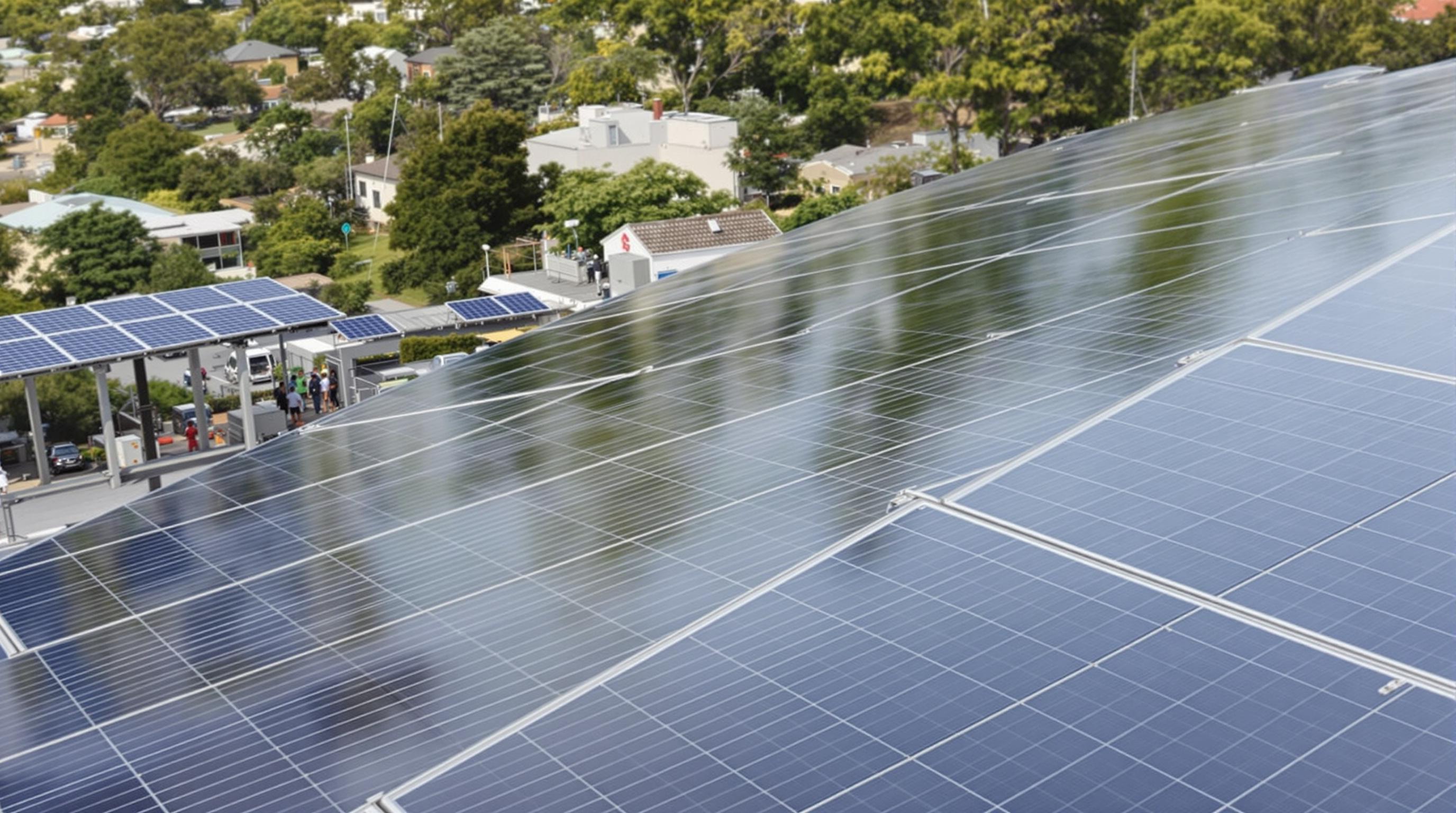
7 Breakthrough Solar Panels Redefining Efficiency Standards You Haven’t Heard About Yet
7 Breakthrough Solar Panels Redefining Efficiency Standards You Haven’t Heard About Yet
Solar technology is evolving rapidly with seven innovative panel designs pushing the boundaries of efficiency and sustainability. From perovskite cells to bifacial modules, these breakthroughs promise to transform how we harness the sun's power.
The Perovskite Revolution: A New Era of Solar Efficiency
Elizabeth, a 52-year-old historian turned renewable energy enthusiast, marvels at the rapid advancements in solar technology. Among these, perovskite solar panels stand out as game changers, boasting efficiencies exceeding 25% in lab settings and the potential for lower manufacturing costs.
Unlike traditional silicon panels, perovskite cells utilize a unique crystal structure, enabling flexibility and adaptability. This breakthrough hints at a future where solar panels might be integrated into windows or even clothing.
The Imperial College London reports that perovskite panels could reduce solar power costs by up to 30%, making renewable energy more accessible globally.
Case Study: Oxford University's Tandem Solar Cells
In a landmark study, Oxford researchers combined perovskite with silicon in tandem cells, achieving efficiencies of 29.15%. This surpasses the typical single-junction silicon panels capped around 22%.
Such collaboration of materials could be the very key to commercial viability within the next five years, revolutionizing residential and industrial solar installations.
Humor Break: When Solar Panels Go Fashion-Forward
Imagine your T-shirt charging your phone during a sunny picnic—sounds like sci-fi, but flexible perovskite panels are inching us closer to that reality. Who knew saving the planet could be part of your wardrobe?
The Rise of Bifacial Solar Panels: Double the Sunlight, Double the Power
Casually strolling through a solar farm, one might notice panels capturing sunlight not just from the front, but also from the rear side. These bifacial solar panels collect reflected light, boosting energy yield by up to 15% compared to traditional panels, per NREL’s studies.
The versatility of bifacial panels allows installation on surfaces like ice or sand where ground albedo enhances reflection, turning otherwise less effective environments into energy hubs.
Statistical Spotlight
A report by the International Energy Agency notes that bifacial technology grew by 40% in usage worldwide between 2018 and 2023, illustrating its rapidly expanding appeal.
Storytelling: The Desert Mirage Farm
In the sun-scorched fields of Arizona, a pioneering farm implemented bifacial panels, yielding 20% more power despite harsh soil conditions. The success inspired neighboring farms to adopt similar strategies, proving innovation’s ripple effect in communities.
Integrated Photovoltaic (BIPV) Panels: When Architecture Meets Energy
Elizabeth admires how modern design harmonizes with sustainability, citing Building Integrated Photovoltaics (BIPV), where solar panels double as building materials. Imagine a skyscraper with glass that not only offers panoramic views but also generates power.
The California Energy Commission highlights that BIPV can reduce material costs by merging solar with façades or roofs while maintaining aesthetics.
Persuasive Note: Why BIPV Is Your Next Home Upgrade
Considering new construction or retrofitting? Choosing BIPV not only slashes your energy bills but increases property value, blending eco-consciousness with smart investment.
Quantum Dot Solar Cells: Tiny Particles, Huge Potential
Quantum dot technology employs nanoscale semiconductor particles to absorb sunlight more efficiently across different wavelengths. Although still in experimental phases, these cells show promise with theoretical efficiencies around 45%.
Because of their tunable properties, quantum dots could harness low-light conditions better than their silicon counterparts, making solar viable even on overcast days.
Humorous Aside: The Solar Panel That Thinks It’s a Chameleon
Solar panels that change color to match their surroundings? Not quite yet, but semi-transparent solar panels are closing in, able to tint windows while producing energy. Perfect for those who want to keep the sunshine inside without the scorching heat.
Case in Point: Samsung's Transparent Solar Windows
Samsung successfully demoed windows with embedded solar cells capturing energy without compromising clarity, a boon for urban settings craving green solutions.
Organic Photovoltaics: A Breath of Fresh Air
These panels use carbon-based materials to convert sunlight into electricity, enabling flexible, lightweight designs. Their manufacturing is less energy-intensive compared to silicon panels, making them environmentally friendly from cradle to grave.
Despite lower efficiencies (~12-15%), ongoing improvements and ultra-low costs could make them popular for portable electronics.
Informal Tip:
Think of organic photovoltaics as the “grassroots” energy solution—small-scale, adaptable, and perfect for gadgets on the go.
Third-Generation Solar Cells: Beyond Silicon and Perovskite
Emerging technologies like multi-junction and hot-carrier solar cells explore new physics to surpass efficiency limits. Multi-junction cells stack multiple layers absorbing different light spectrums, some achieving over 40% efficiency in controlled environments.
The deployment costs remain high, but as manufacturing tech improves, these cells could power satellites and advanced terrestrial systems.
Final Thoughts
As a 43-year-old engineer passionate about sustainable living, I’m optimistic about these seven solar breakthroughs. They demonstrate that history’s narrative of energy is swiftly rewriting itself, with science making the future brighter—literally and figuratively.
For anyone between 16 and 70 interested in green tech, staying informed about these innovations is not just academic—it’s essential.
Sources:
1. National Renewable Energy Laboratory (NREL)
2. International Energy Agency (IEA)
3. California Energy Commission
4. Oxford University Solar Energy Research Group
5. Samsung Newsroom
6. Imperial College London Renewable Energy Reports
Read More